Power management
Coordination of solar and thermal generation, load demand and generation reserve.
Explore solution: Power management
SYNC · One of our core specialties
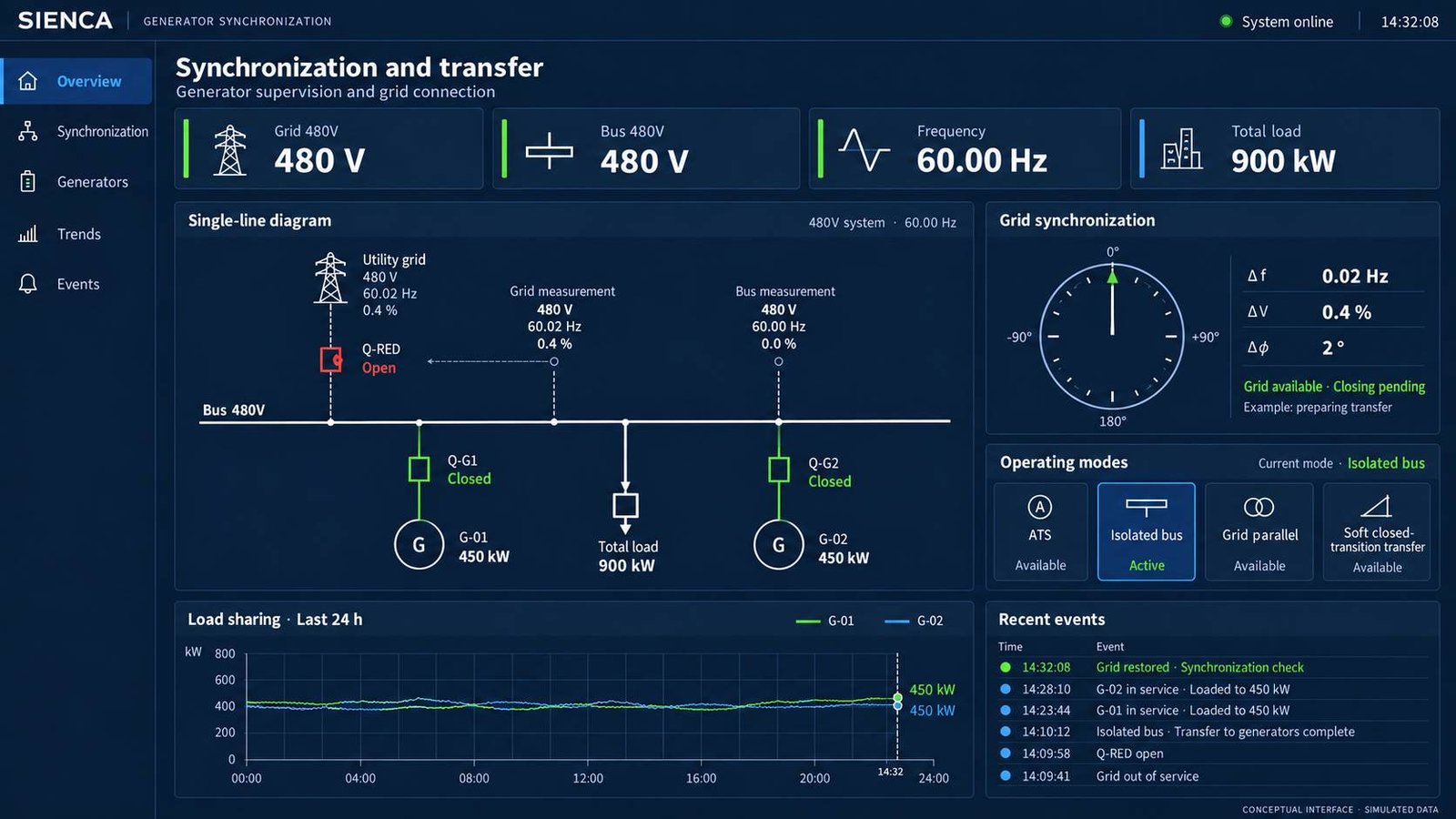
We design synchronization, transfer and load management systems for generators on isolated buses or in parallel with the utility grid.
01 / Capabilities
Scope is defined around the needs, equipment and conditions of each project.
ATS sequences tailored to the installation and its power sources.
Generator synchronization for coordinated operation on an isolated bus.
Synchronization with the utility grid for soft closed-transition transfer and load contribution.
Load demand control and generator operation to reduce demand peaks according to the application.
Integration of load shedding sequences according to the operating philosophy.
SCADA and HMI interfaces to monitor and operate the functions included in the project.
02 / Solution focus
We integrate solar generation and storage with generators, coordinating the sources around operating needs.
Interfaces and responsibilities
A clear scope reduces integration risk. These points are agreed in writing at the start of the project.
How we implement it
Needs, installation and operating conditions.
Architecture, hardware and programming.
Interfaces, functions and acceptance criteria.
Commissioning and agreed technical support.
Support
For solutions implemented by SIENCA, we offer remote assistance and recurring site visits within an ongoing maintenance program.
Service arrangements and coverage defined for each project.
Keep exploring
Coordination of solar and thermal generation, load demand and generation reserve.
Explore solution: Power managementSource integration and coordination of microgrid operating modes.
Explore solution: Microgrids & hybrid generationLoad shedding following generation loss to help maintain system stability.
Explore solution: Automatic Load SheddingLet’s talk about your next project
Tell us what you need to integrate, control or improve. Understanding your project is the starting point.
Let’s discuss your projectShare your needs, country and project stage.